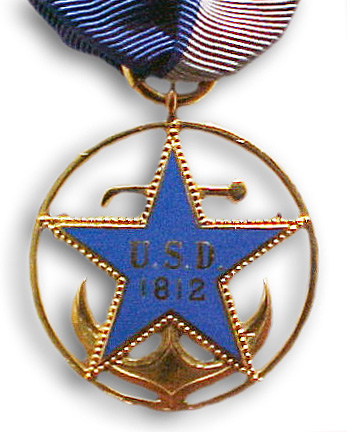



Membership
Admission to
membership in the
National Society is by invitation after an affirmative vote by the
chapter or state society. Applicants shall have the endorsement of two
members in good standing to whom the applicant is personally known.
You can download a worksheet here.
Membership is available to women age eighteen and over who can offer satisfactory proof that they are lineal descendants of an ancestor who, during the period of 1784-1815 inclusive, rendered civil, military, or naval service to our country, rendered material aid to the U.S. Army or Navy, or who participated in the Lewis and Clark Expedition. Junior membership is available to girls and boys from birth through age 21. Young women between the ages of eighteen and thirty-five are known as Flora Adams Darling Daughters in honor of the Society's first president.
Service may be, but not limited to the following:
 Those who signed the Oath of
Allegiance or the Loyalty Test.
Those who signed the Oath of
Allegiance or the Loyalty Test.
All state, county and town
officials and also jurors.
A
member of the Continental or Federal Congress, or a member of a State
Assembly or Legislature of one of the first eighteen states.
A delegate to the convention which framed The
Constitution of the United States.
A member of a State Convention which ratified
The Constitution of the United States.
An elector of one of the first four
Presidents of the United States.
A
legislative, executive or judicial officer of the United States of
America, including such appointive officers as Treaty Commissioners,
Territorial Officers, etc.
Military or Naval Service in any of the following insurrections or wars:
Wyoming
Valley, Pennsylvania, 1784-1787. (A local disturbance between settlers
from Connecticut and Pennsylvania in said valley.)
Shay's
Rebellion, Massachusetts, 1786-1787. (Local, grew out of burdensome
taxation. Confined to and suppressed by militia of the State of
Massachusetts.)
Wars with Indians, 1784-1815.
Whiskey
Insurrection, Pennsylvania, 1794. (Local, arose in consequence of
certain taxes on domestic spirits. Suppressed by the authority of the
United States.)
War with France (Undeclared), 1798-1800.
(Naval, carried on by the United States through its Navy and
privateers.)
Sabine Expedition, Louisiana, 1806.
Attack
of British warship Leopard upon the United States frigate Chesapeake.
(Disturbance growing out of attack of the British warship Leopard on
the American frigate Chesapeake, as the result of the British claim to
the right to search. The attack occurred at sea off Hampton Roads,
Virginia. The militia was called out by the authority of the
President.)
Embargo troubles, - Lake Champlain, 1808.
Engagement
between United States frigate President and the British ship Little
Belt. (An engagement on the Atlantic, off the southern coast of the
United States, resulting from the British claim of right to search.)
Expedition against Lafitte Pirates, 1814.
(Local, conducted by the authority of the United States.).
Wars
with the Barbary Powers, 1801-5 and 1815. (Conducted by the authority
of the United States through its Navy on the northern coast of Africa.)
War
with Great Britain, 1812-1815. (General, covering nearly the entire
territory of the United States, especially the seaboard.)
The Creek War, 4 October 1814 to 24 January
1815. (Local, but conducted by the authority of the United States.)
Lafitte Aides to General Andrew Jackson.
Local or state militia service, 1784-1815, or
giving material aid to the Army and Navy.
Member of the Lewis and Clark Expedition,
1804-6. (Military exploring expedition to find land route to the
Pacific Ocean.)
Membership is available to women age eighteen and over who can offer satisfactory proof that they are lineal descendants of an ancestor who, during the period of 1784-1815 inclusive, rendered civil, military, or naval service to our country, rendered material aid to the U.S. Army or Navy, or who participated in the Lewis and Clark Expedition. Junior membership is available to girls and boys from birth through age 21. Young women between the ages of eighteen and thirty-five are known as Flora Adams Darling Daughters in honor of the Society's first president.
Service may be, but not limited to the following:
Those who signed the Oath of
Allegiance or the Loyalty Test. All state, county and town
officials and also jurors. A
member of the Continental or Federal Congress, or a member of a State
Assembly or Legislature of one of the first eighteen states. A delegate to the convention which framed The
Constitution of the United States. A member of a State Convention which ratified
The Constitution of the United States. An elector of one of the first four
Presidents of the United States. A
legislative, executive or judicial officer of the United States of
America, including such appointive officers as Treaty Commissioners,
Territorial Officers, etc.Military or Naval Service in any of the following insurrections or wars:
Wyoming
Valley, Pennsylvania, 1784-1787. (A local disturbance between settlers
from Connecticut and Pennsylvania in said valley.) Shay's
Rebellion, Massachusetts, 1786-1787. (Local, grew out of burdensome
taxation. Confined to and suppressed by militia of the State of
Massachusetts.) Wars with Indians, 1784-1815. Whiskey
Insurrection, Pennsylvania, 1794. (Local, arose in consequence of
certain taxes on domestic spirits. Suppressed by the authority of the
United States.) War with France (Undeclared), 1798-1800.
(Naval, carried on by the United States through its Navy and
privateers.) Sabine Expedition, Louisiana, 1806. Attack
of British warship Leopard upon the United States frigate Chesapeake.
(Disturbance growing out of attack of the British warship Leopard on
the American frigate Chesapeake, as the result of the British claim to
the right to search. The attack occurred at sea off Hampton Roads,
Virginia. The militia was called out by the authority of the
President.) Embargo troubles, - Lake Champlain, 1808. Engagement
between United States frigate President and the British ship Little
Belt. (An engagement on the Atlantic, off the southern coast of the
United States, resulting from the British claim of right to search.) Expedition against Lafitte Pirates, 1814.
(Local, conducted by the authority of the United States.). Wars
with the Barbary Powers, 1801-5 and 1815. (Conducted by the authority
of the United States through its Navy on the northern coast of Africa.)
War
with Great Britain, 1812-1815. (General, covering nearly the entire
territory of the United States, especially the seaboard.) The Creek War, 4 October 1814 to 24 January
1815. (Local, but conducted by the authority of the United States.) Lafitte Aides to General Andrew Jackson. Local or state militia service, 1784-1815, or
giving material aid to the Army and Navy. Member of the Lewis and Clark Expedition,
1804-6. (Military exploring expedition to find land route to the
Pacific Ocean.)